ApolloAn ADHD-native social app with no streaks, no counts, and no color.
- Role
- Founder & product designer
- Scope
- Designed end to end, solo
- Timeline
- 1-day hackathon + ongoing updates
- Year
- 2026
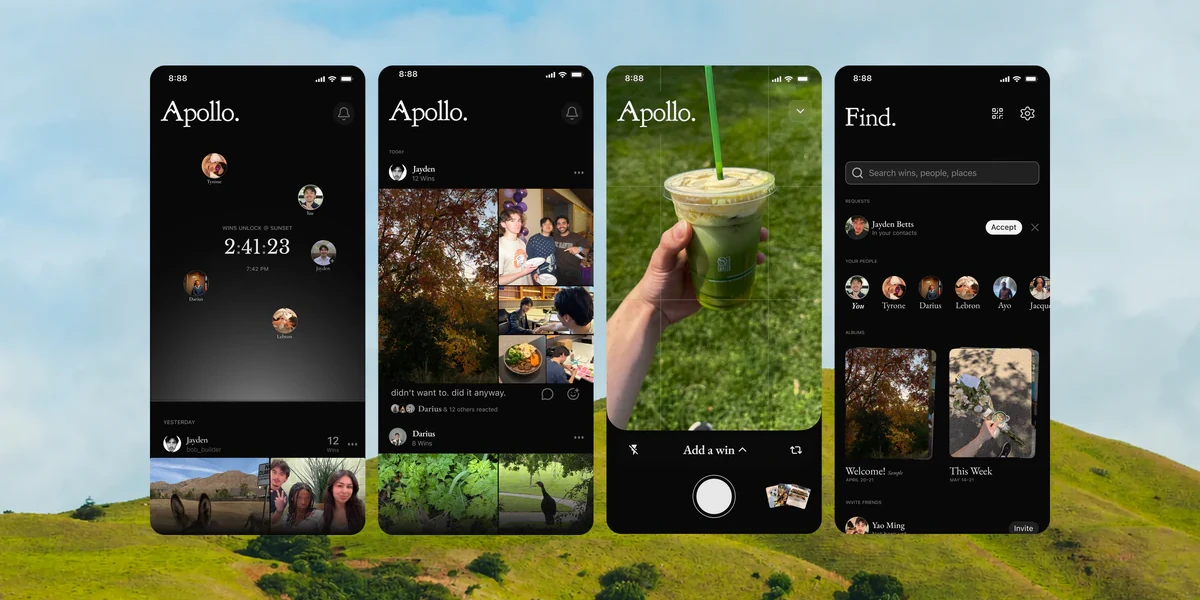
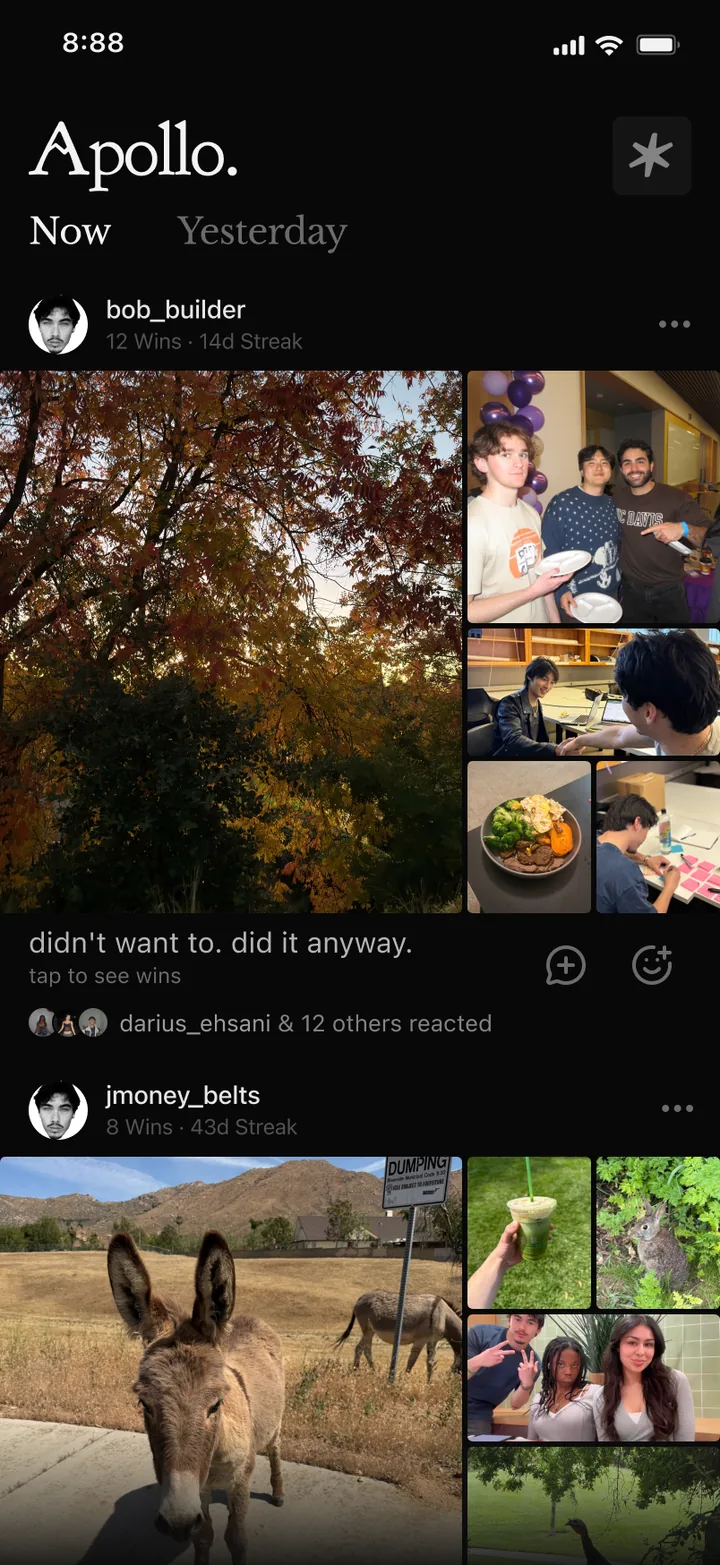
You capture a daily win, big or small, and it becomes a post your close friends witness. Apollo is built for the way ADHD brains actually work: no streaks, no shame, no doomscroll.
I carried an entire product, every flow and every decision, on my own.
- ResearchGrounded the product in Self-Determination Theory, the Progress Principle and ADHD reward studies, rather than in what other habit apps already do.
- Product thinkingChose the mechanics to leave out and defended the absence: no streaks, no counts, no leaderboards.
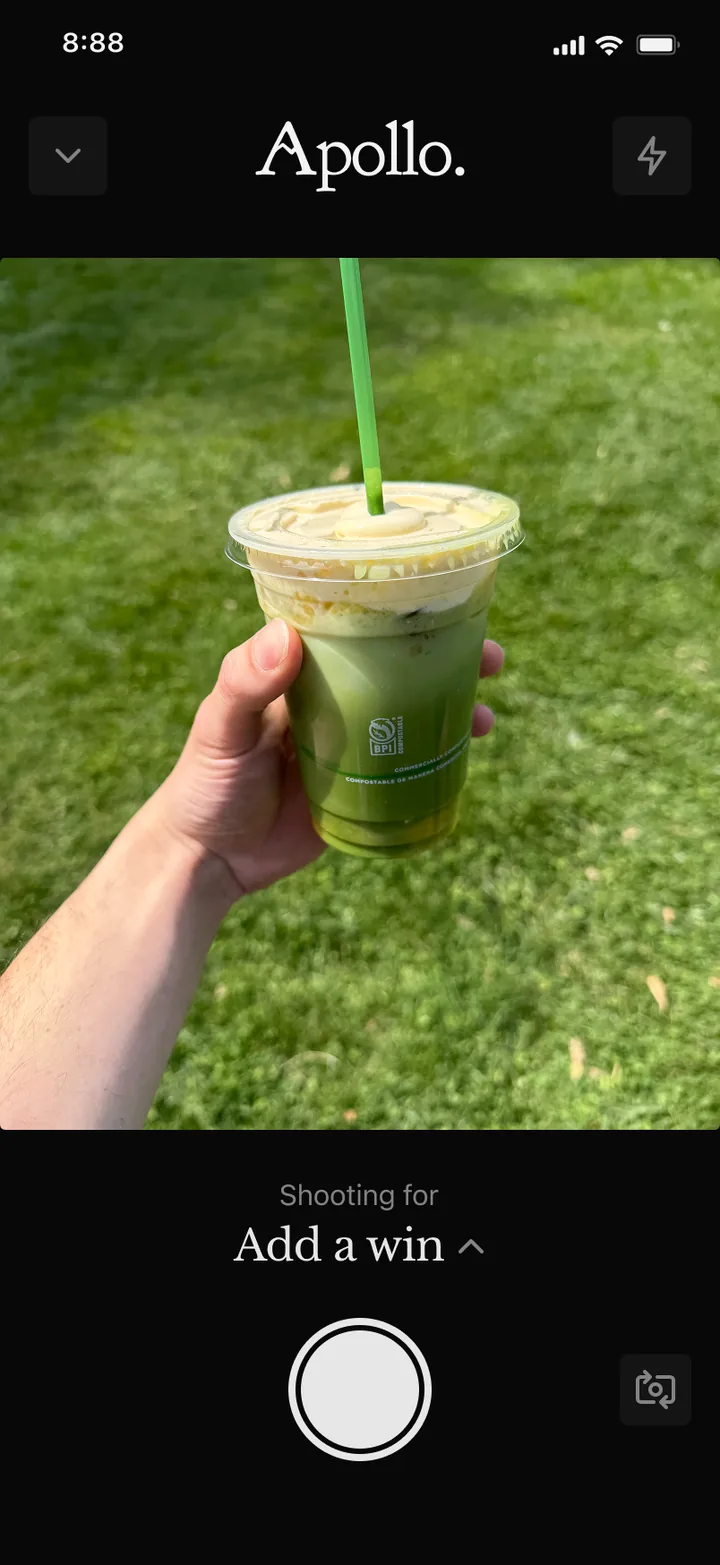
- InteractionBuilt the capture flow around the camera and cut the camera roll, so a win is caught rather than staged.
- Visual designHeld the whole interface in grayscale, so the only colour in the app is the user's own photograph.
- ResearchADHD reward studies, Self-Determination Theory and the Progress Principle, before any screens.
- HackathonThe whole loop built in one day: camera, win card, shared feed.
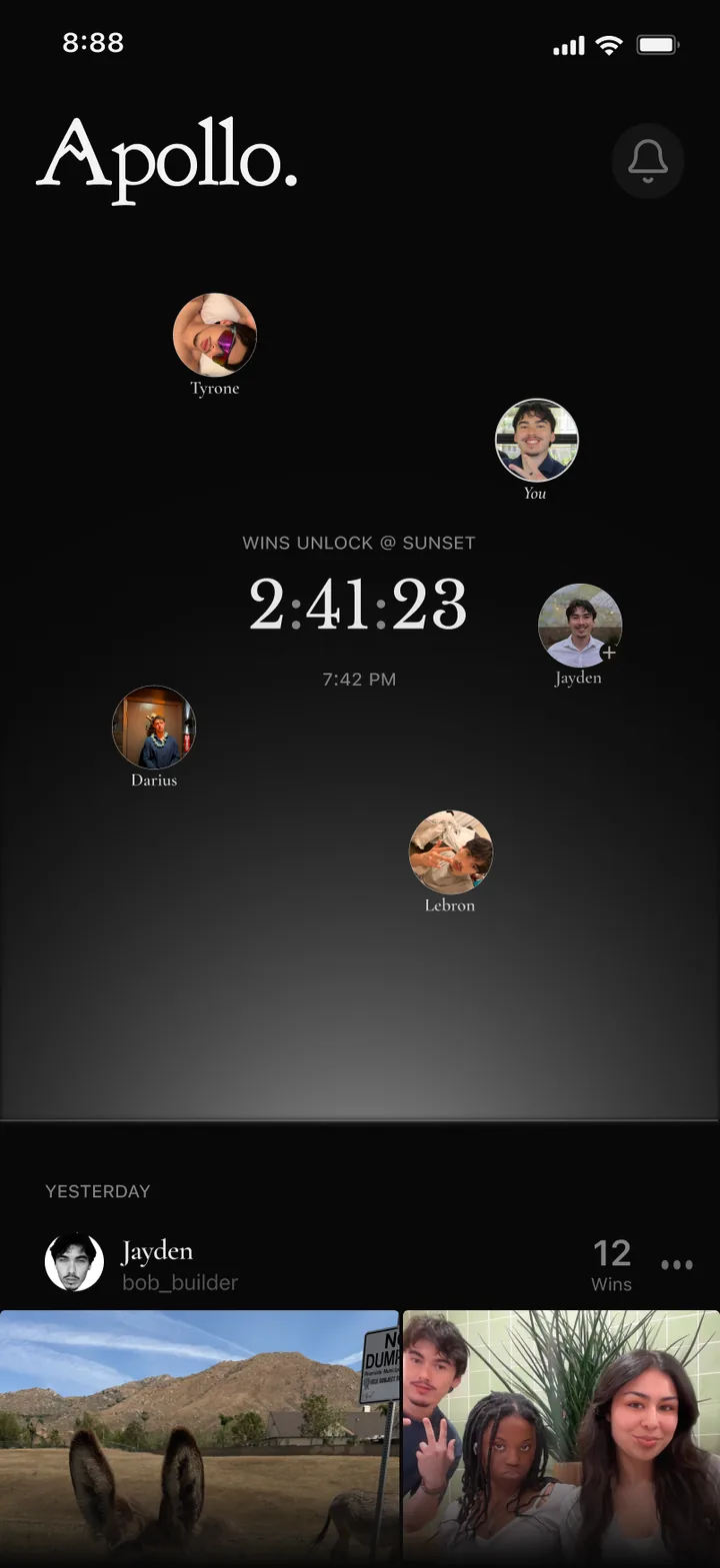
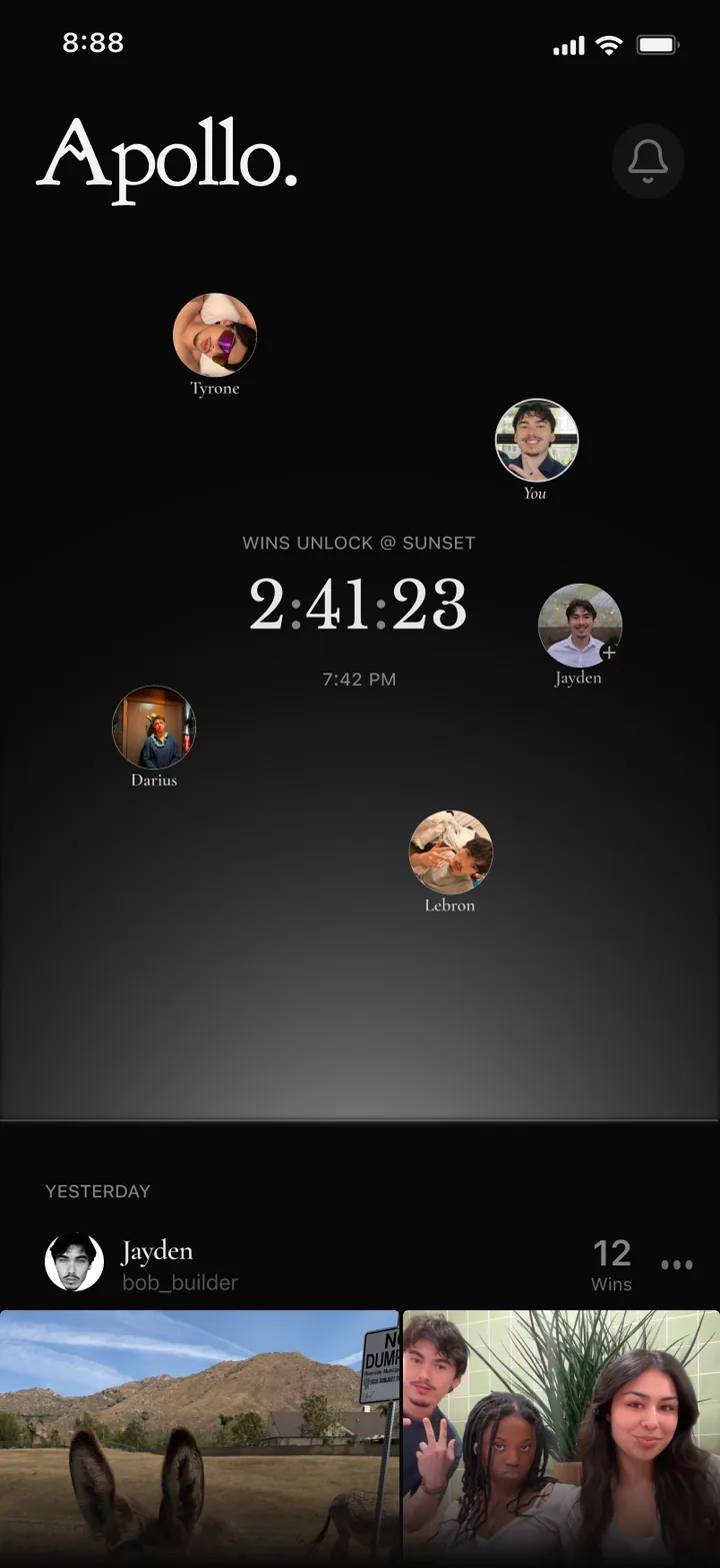
- RedesignThe always-open feed came out. Wins now unlock once, at sunset.
- SinceFeatured by Major League Hacking, and still changing.
Small wins are the whole game.
Apollo grew straight out of Strata, aimed at winning instead of habits. I have ADHD, and it is built for the part I find hardest: the middle, where the reward feels furthest away, and it is not a niche, because $14,092 is what adult ADHD costs one person every year in lost productivity, missed work and healthcare.Schein et al., 2021
Everyone wanted it to be social. While building Strata I ran 30 user interviews, and one request kept surfacing: a social layer, a way to stack wins together. The bet is that witnessing beats willpower: when you watch your friends show up, showing up becomes contagious, and no streak counter can do that. 76% of goals get finished by people who write them down and send weekly progress to a friend, against 43% who keep them to themselves.Matthews, Dominican University
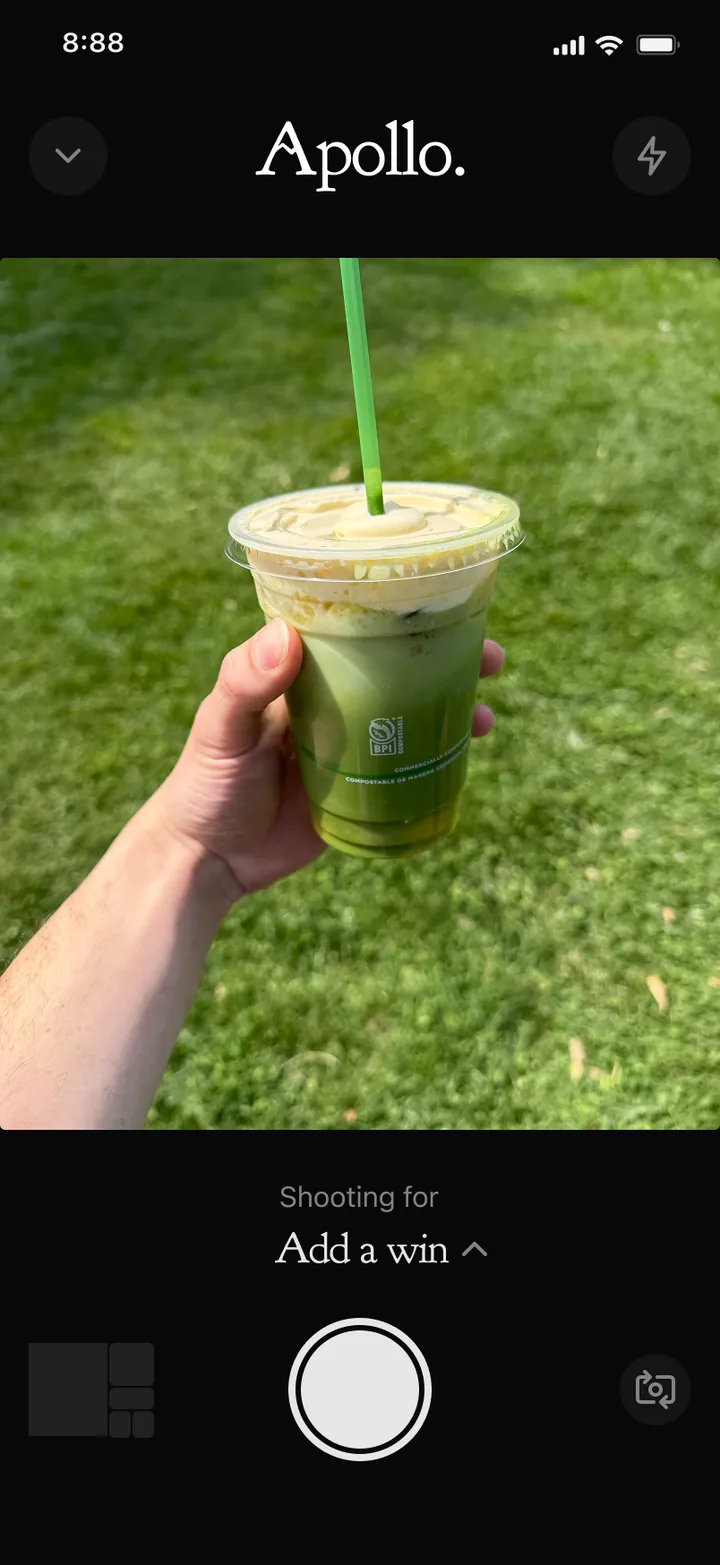
Nothing chosen yetThe camera opens first and asks what the shot is for.
The first camera captured the feeling, not the angle.
I kept the camera restrained on purpose. A camera roll means posting your most posed shot, but a win is about the feeling, not the frame.
Designed for the way ADHD brains work.
No follower counts, no leaderboards, nothing that turns showing up into a number you can lose.
Apollo holds one calm, grayscale world, a deliberate ADHD decision. Dysregulated dopamine leaves ADHD brains most vulnerable to the saturated color apps use to trigger a hit, so there is no red anywhere and no color in the interface at all. The only color in Apollo is your own photos.
North gives. It never nags.
North is a small AI companion that reflects back a pattern it noticed in your wins. It encourages rather than nags, and it never pretends to be human.
What I changed after the hackathon.
The feed
Social feeds reward you on a variable schedule, the loop that hits ADHD brains hardest. So wins stay locked until sunset, when everyone’s unlock at once: one fixed daily moment instead of a compulsion.
The camera
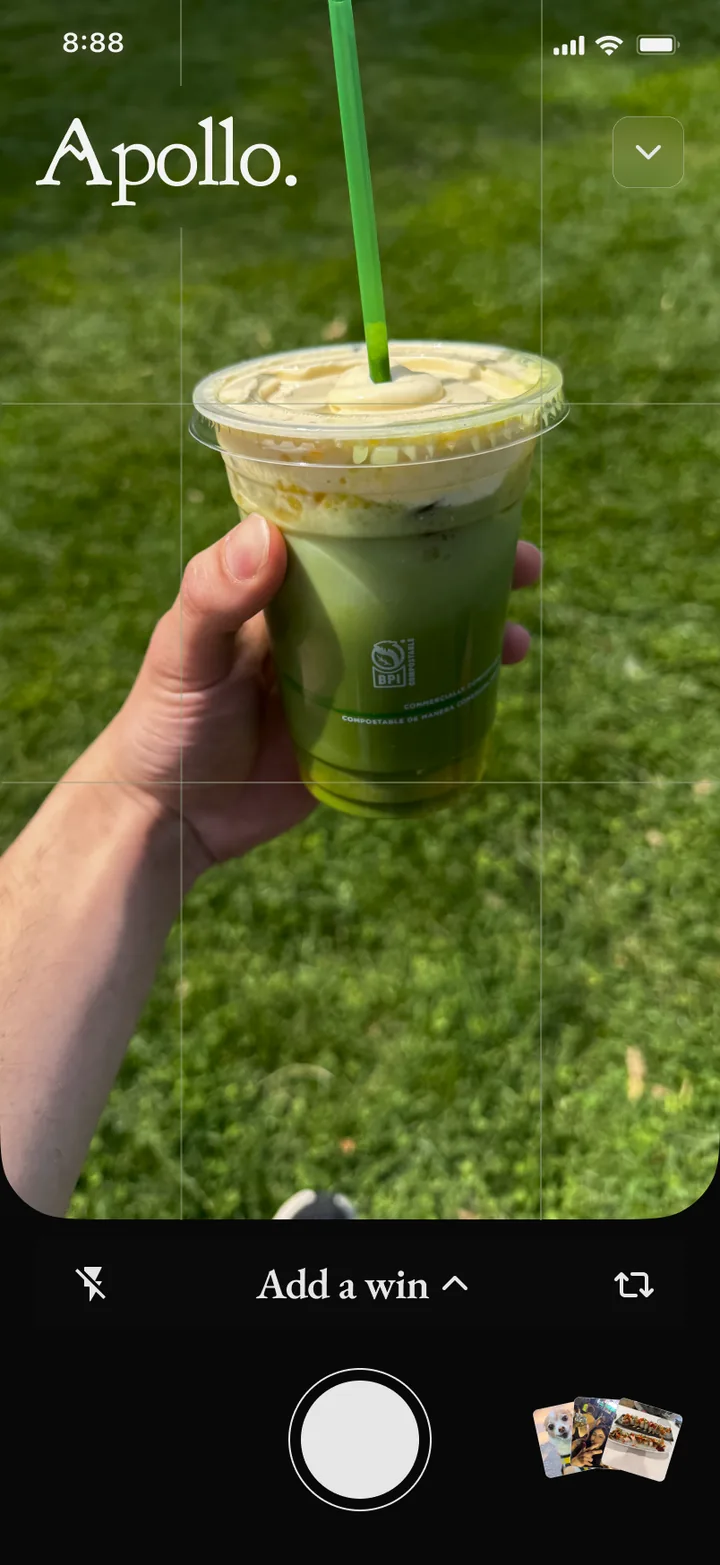
I gave the viewfinder the whole screen so capturing a win feels cinematic, not clerical. Flash and rotate move to the thumb edges so nothing competes with the shot.
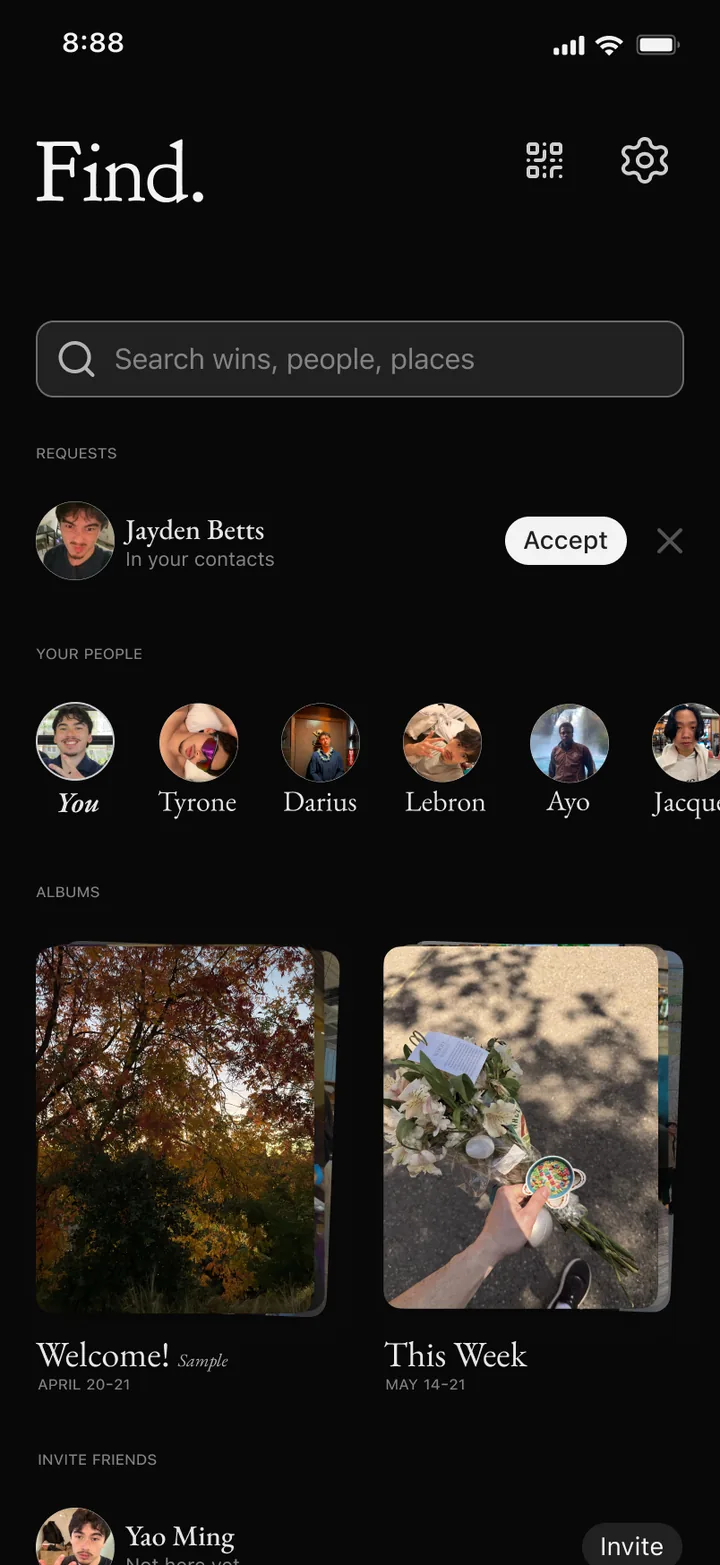
Connect becomes Find
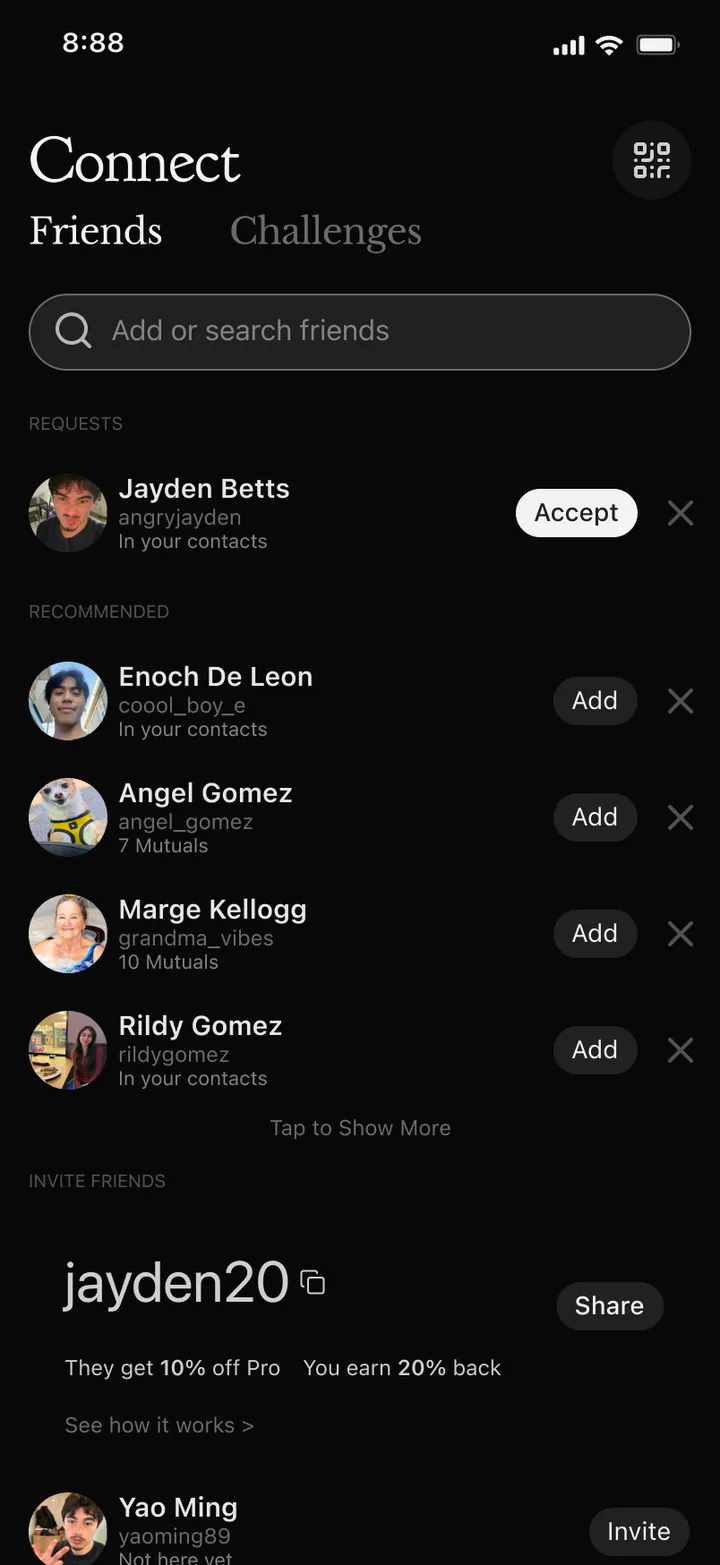
Connect was a bare utility for adding people. Find makes it one hub: albums curated to you, friends’ profiles, requests, and settings one tap away.
The one I built for me.
I carried an entire product, every flow and every decision, on my own. It is still in progress. Reach out and I’ll walk you through where it stands today.