Strata710 edits to learn where AI stops and design starts.
- Role
- Designer & builder
- Team
- Solo designer
- Built with
- Lovable, then Xcode
- Demo
- Playable on this page
- Year
- 2025
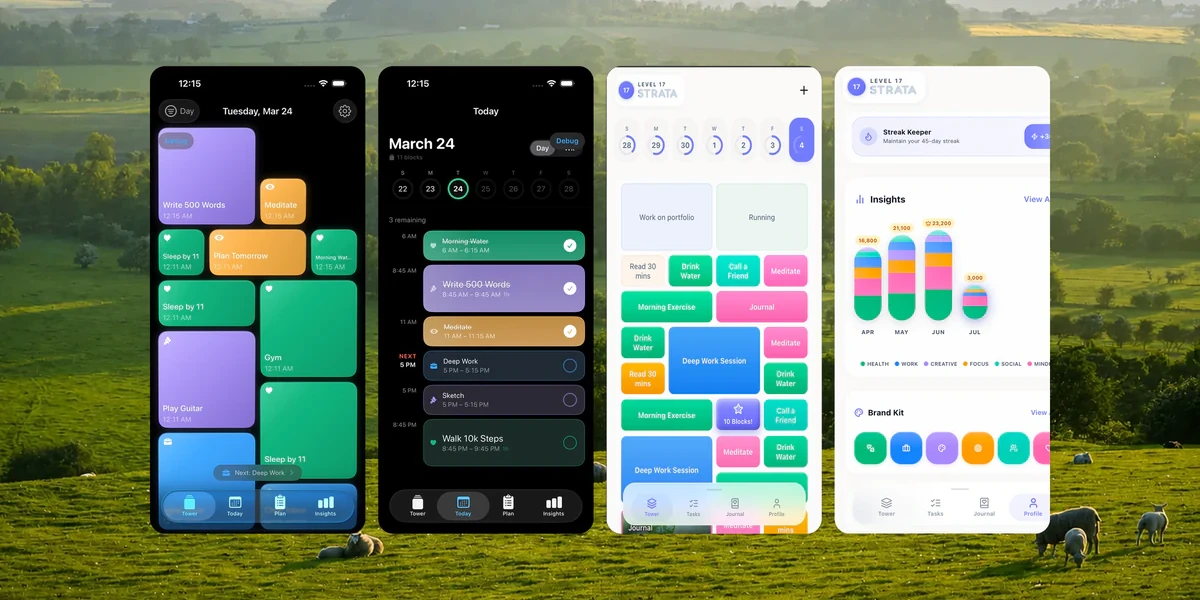
Strata is a gamified habit builder: your wins stack up as colorful blocks, Tetris meets Minecraft, until the month becomes a tower you built one habit at a time. I designed and built it end to end in Lovable, then taught myself Xcode and rebuilt it natively.
I designed and built Strata end to end, then rebuilt it natively.
- Product thinkingTook a class pitch past the slides and built the product, to find out whether the idea actually held.
- Design and buildShipped it twice: once in Lovable, then natively after teaching myself Xcode.
- Iteration710 edits, and the finding underneath them: AI is a tool for bringing my designs to life, not a replacement for doing the design.
- InteractionDesigned the payoff. Complete every habit for the day and the whole tower breaks into a dance.
- BriefA class assignment that asked only for a pitch.
- BuildLovable first, to get the thing playable and in front of people.
- RebuildThen Xcode, taught from scratch, for a native version.
- Outcome30 user interviews out of it, and the request that became Apollo.
The assignment stopped at a pitch. Strata didn’t.
The assignment in my entrepreneurship class was to pitch a product. I did not want to stop at slides, so I built the thing. The problem was my own: some habits stick effortlessly, picking up a guitar never does.
710 edits to get it right.
The hard part was not the code, it was the direction. The 710 edits were not repairs, they were iterations: the more specific I got, the better it came out.
AI is a tool, not a replacement.
AI is a tool for bringing my designs to life, not a replacement for doing the design. The color system, the way a block lands, the tower dance: all mine. AI only got it playable faster than I could alone.
Finish your day, and the tower dances.
Every block lands with a sound, and you earn XP as your tower climbs. The interaction I am proudest of is the payoff: finish every habit for the day and the whole tower breaks into a dance. That is the thesis, turning friction into something you look forward to.
150%the lift in engagement a real game layer can add over a plain interface. amplifAI
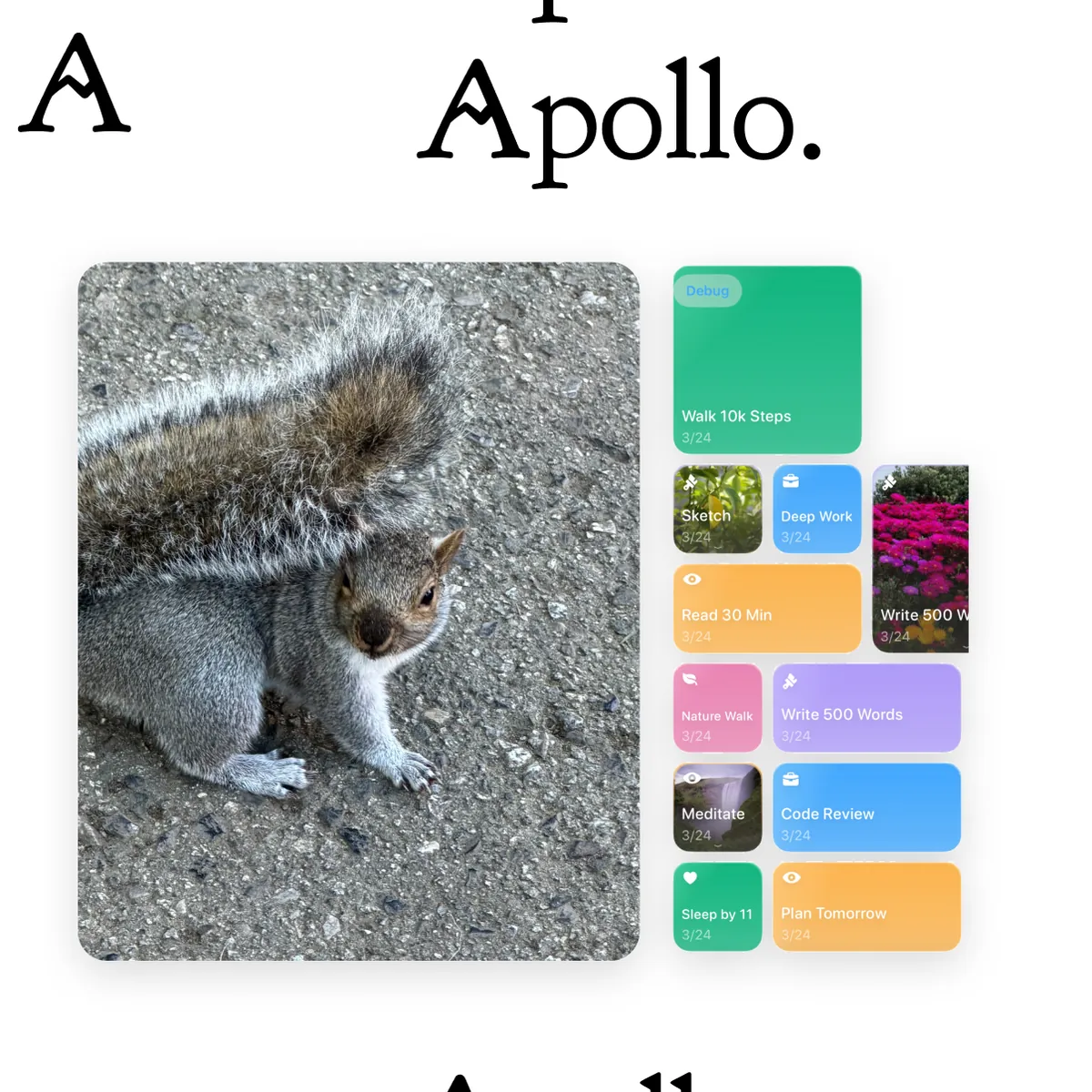
Finishing Strata is what led to Apollo.
After months of work I saw that even done well, Strata was not the best product I could make: the gamified-habit space is saturated, and one more block-stacking tracker was never going to win. Seeing that is what led me to Apollo.